
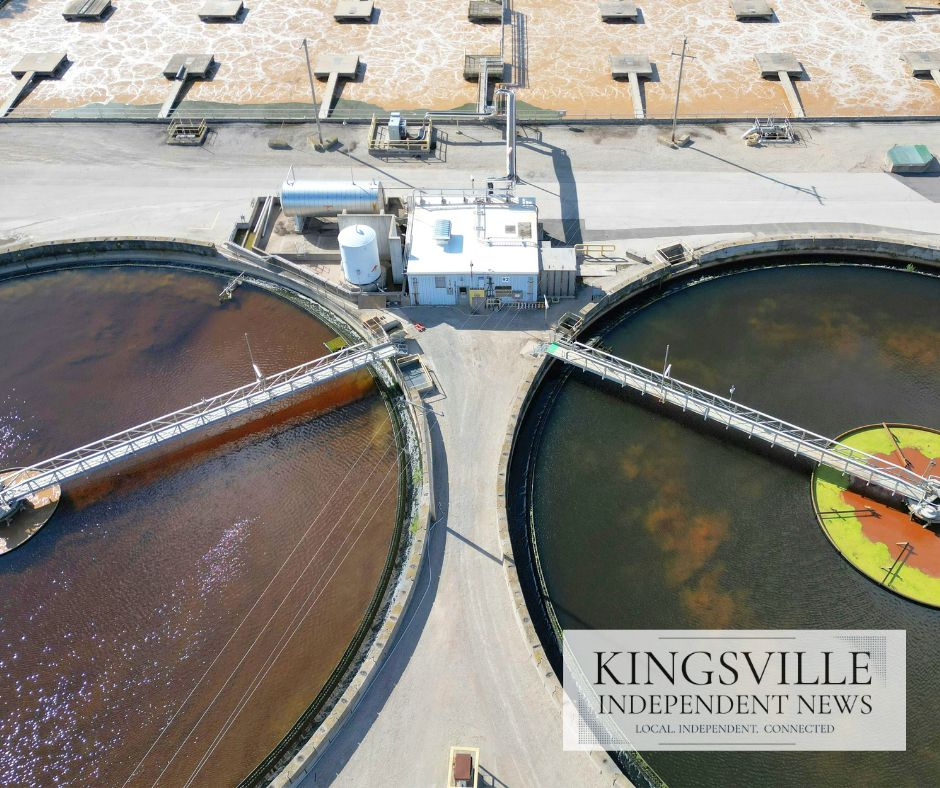
Photo caption: Aerial view of water treatment infrastructure. Large-scale water projects often involve complex treatment and disposal systems.
By Kingsville Independent News Staff
KINGSVILLE — Water planning in South Texas rarely draws widespread public attention. In 2025, it did.
Throughout the year, the South Texas Water Authority discussed long-term water supply options amid persistent drought conditions, according to authority board agendas and meeting packets. Those discussions, particularly around a proposed groundwater desalination project involving a private company, drew scrutiny from residents, local officials and environmental interests as details emerged and public questions mounted.
This explainer summarizes what STWA discussed and decided in 2025, what became controversial, and what may warrant follow-up as the region moves into 2026.
What STWA is and how it makes decisions
The South Texas Water Authority is a regional governmental entity created under Texas law to help secure and deliver water supplies for its member communities. It is governed by a board of directors that meets publicly, with agendas, supporting materials and designated citizen comment periods posted in advance, according to STWA records.
Under state law, the authority may plan and construct water infrastructure, enter long-term supply contracts, levy taxes within its jurisdiction and, when required, seek voter approval to issue bonds to finance projects.
The central issue in 2025: long-term water supply planning
According to STWA agenda packets from 2025, a major focus of the board was evaluating long-term water supply options as drought pressures continued across South Texas.
Among the options discussed was a brackish groundwater desalination project tied to Seven Seas Water Group, a private firm that develops and operates desalination facilities. The partnership and its potential role in regional water supply were discussed during multiple public meetings and later examined in regional media coverage.
Desalination can convert brackish groundwater into potable water, but it also produces a concentrated waste stream, often referred to as brine, that must be disposed of safely, making environmental review and disposal planning central to the discussion.
What STWA discussed and decided in 2025
Disposal options became a focal point
STWA board agendas from mid-2025 list items titled “Discussion and Possible Action, Discharge Options: Brackish Desalination Project,” reflecting sustained discussion of how desalination byproducts would be handled.
One option discussed involved surface discharge routes connected to waterways that flow toward Baffin Bay, according to STWA meeting materials and later reporting by KRIS 6 News.
That possibility prompted strong reaction from residents, fishing interests and environmental advocates, who raised concerns about downstream impacts. Following public backlash, the STWA board voted to remove Baffin Bay discharge from consideration, a decision confirmed both in board records and in KRIS 6 News reporting later in the summer.
Meeting minutes from that period reflect that the board anticipated public concern and discussed alternative disposal approaches.
Questions about studies and contract details followed
A separate line of scrutiny emerged as regional leaders examined what information was available to evaluate the proposed desalination project.
In September 2025, KRIS 6 News reported that Corpus Christi officials questioned aspects of the STWA–Seven Seas proposal, citing redacted documents and the absence of completed studies at the time discussions were underway. The reporting noted that the project’s scale could expand significantly if additional customers, including Corpus Christi, were added.
The same reporting highlighted inconsistencies between earlier public messaging about cost estimates and later meetings where specific pricing could not yet be provided, contributing to uncertainty about long-term financial impacts.
City of Corpus Christi meeting materials from that period show the topic appeared on council agendas, with officials opting to extend timelines while due diligence continued.
Water-quality testing entered public discussion
Later in 2025, KRIS 6 News reported on laboratory testing related to a Seven Seas test well, citing findings that included arsenic levels above federal drinking-water standards and radioactive indicators. The reporting also noted that it had not been determined whether that test well would ultimately serve as the source for the proposed facility.
While reverse osmosis is commonly used to treat such contaminants, the reporting underscored why residents and officials emphasized the need for clear monitoring plans, treatment guarantees and disposal safeguards before projects advance.
Timeline: Key STWA actions and public scrutiny in 2025
Early 2025
- STWA board agendas and packets show ongoing discussion of long-term water supply planning amid persistent drought conditions, including exploration of a brackish groundwater desalination project.
Spring 2025
- Meeting materials reflect continued evaluation of desalination feasibility and infrastructure needs, with references to partnerships involving a private water company later identified in regional reporting as Seven Seas Water Group.
Summer 2025
- STWA agendas include items titled “Discussion and Possible Action, Discharge Options: Brackish Desalination Project.”
- KRIS 6 News reports that one disposal option discussed involved discharge into Petronila Creek, a waterway connected to Baffin Bay, prompting public concern.
August 2025
- Public backlash intensifies following media coverage of potential environmental impacts tied to desalination waste disposal.
- According to KRIS 6 News and STWA meeting records, the board votes to remove Baffin Bay discharge from consideration.
September 2025
- KRIS 6 News reports that Corpus Christi officials question the STWA–Seven Seas proposal, citing redacted documents and missing studies.
- City of Corpus Christi materials show officials extending timelines as due diligence continues.
Late 2025
- KRIS 6 News reports on lab results from a Seven Seas test well, citing arsenic above federal standards and radioactive indicators, while noting the source water had not been finalized.
- STWA continues water planning discussions without formally calling a bond election during the year, based on board packets and public election records reviewed.
Why the issue became controversial
The debate surrounding STWA in 2025 did not center on whether South Texas needs long-term water planning, a point broadly acknowledged across the region, but rather on how decisions were being communicated and evaluated.
Environmental concerns rose sharply when potential discharge routes became public. Transparency questions followed as residents and officials said key details were difficult to assess early in the process. Cost uncertainty added to public unease, particularly given the long timelines associated with water infrastructure projects.
What is brine and why is disposal controversial?
Brine is the concentrated waste stream left over after desalination removes salts and minerals from brackish groundwater.
According to the Texas Water Development Board, desalination can significantly expand water supplies in arid regions, but managing the resulting concentrate is one of the most challenging aspects of the process. Brine typically contains high levels of salt and other dissolved minerals, and improper disposal can harm soil, groundwater or surface waters.
Common disposal methods include deep-well injection, evaporation ponds or surface-water discharge under strict permitting conditions. Each option carries tradeoffs involving cost, environmental risk and regulatory oversight.
In South Texas, brine disposal became controversial in 2025 because some options discussed publicly involved waterways connected to sensitive ecosystems. Residents and environmental advocates raised concerns about downstream impacts, while water planners emphasized that disposal options were still under evaluation and subject to regulatory approval.
The Texas Water Development Board notes that careful siting (the process of selecting where a facility, well, pipeline, or discharge point is located), monitoring and permitting are essential to minimize environmental risks, a point that shaped public debate as STWA weighed its options.
Where grassroots scrutiny fits
As these issues unfolded, public scrutiny intensified. Grassroots groups such as South Texas Water Watch began organizing online, urging residents to pay closer attention to water governance, long-term contracts and public debt.
While such groups advocate specific positions, their emergence reflects a broader statewide pattern: water infrastructure decisions increasingly intersect with public trust, environmental protection and economic accountability.
What did not occur in 2025
Some public conversations referenced potential future bond elections. STWA board materials reviewed for 2025 include routine references to debt service and existing bonds as part of annual tax and budget discussions, which is standard practice for water authorities.
However, based on STWA agendas, packets and publicly available election records reviewed for this explainer, no STWA bond election was formally called or placed before voters during 2025. That assessment reflects the records reviewed and does not preclude future bond proposals.
What to watch in 2026
As the new year begins, developments that could prompt renewed public attention include:
- A board vote advancing a desalination project from planning into implementation
- Environmental permitting or disposal approvals
- A formally called bond election or financing resolution tied to a specific project
- New municipal or industrial customer commitments
- Publication of engineering studies, monitoring plans or third-party reviews
Staying informed
STWA posts meeting agendas, agenda packets and minutes on its website, and board meetings are open to the public with designated opportunities for citizen comment.
Kingsville Independent News will continue monitoring public records, board actions and regional reporting as water planning decisions move forward.
Editor’s note
This explainer is based on publicly available STWA board records, City of Corpus Christi meeting materials and regional news reporting from 2025. It will be updated as new actions occur.