
Editor’s Note: This is the second in a three-part series examining changes to the Supplemental Nutrition Assistance Program (SNAP) and what they could mean for communities in South Texas.
By Kingsville Independent News Staff
In Kleberg County, thousands of residents rely on the Supplemental Nutrition Assistance Program each year to help pay for groceries.
As new SNAP purchase restrictions took effect in Texas on April 1, the program continues to play a significant role not only in supporting households, but also in the local economy.
Recent federal data shows SNAP participation in Kleberg County typically ranges between about 5,000 and 6,000 residents annually, according to figures compiled by the U.S. Department of Agriculture and the Federal Reserve Bank of St. Louis, which tracks county-level program participation.
With a population of just under 30,000 residents, that means roughly one in five people in Kleberg County receives SNAP assistance in a typical year.
Millions spent locally each year
While the program is often discussed in terms of food assistance, it also represents a significant source of grocery spending in the local economy.
On average, SNAP recipients in Kleberg County receive about $340 per month in benefits, according to data reported by the Texas Health and Human Services Commission, which administers the program in the state.
With approximately 5,600 residents participating, that translates to an estimated $900,000 in grocery purchases made each month using SNAP benefits.
Over the course of a year, those purchases can total more than $11 million flowing through local retailers.
Economists who study the program say those dollars often have ripple effects beyond the checkout line. Research cited by the U.S. Department of Agriculture estimates that every $1 spent through SNAP generates about $1.50 in economic activity, supporting grocery jobs, transportation, food suppliers and other parts of the local food economy.
Where SNAP dollars are spent
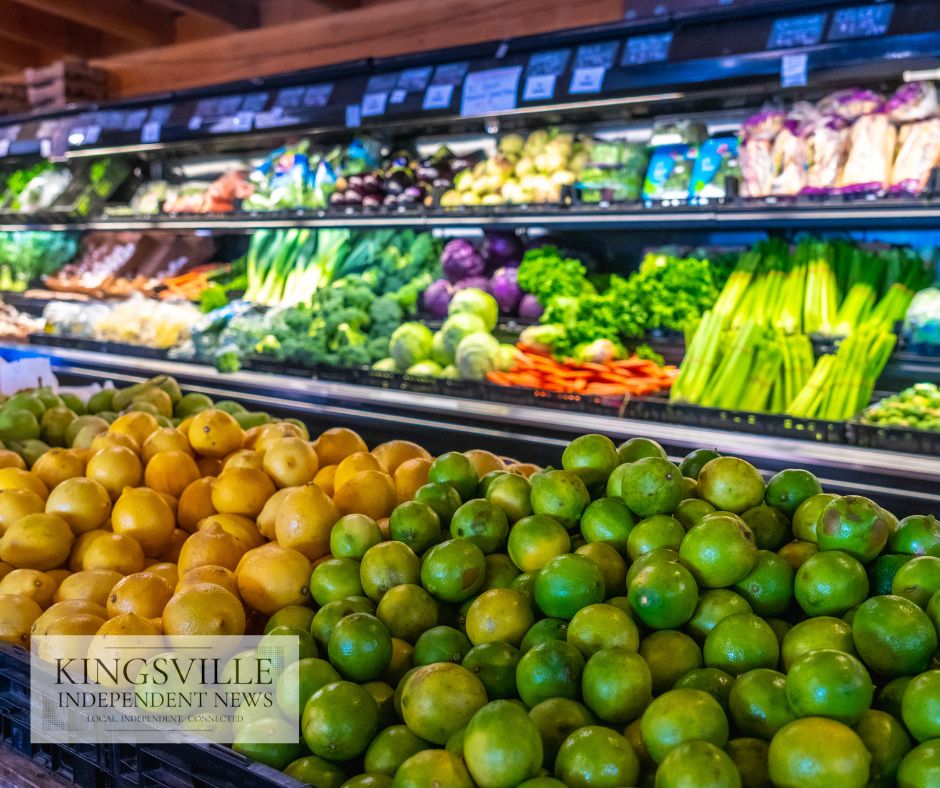
In Kleberg County, SNAP purchases are typically made at stores that offer full grocery selections, including Walmart and H-E-B in Kingsville, which are among the largest food retailers in the area.
Many residents also use SNAP benefits at smaller retailers such as dollar stores, neighborhood markets and convenience stores, which are common grocery options in smaller communities.
Federal rules allow approved retailers to accept SNAP benefits as long as they sell a variety of staple food items such as bread, dairy products, meat or produce.
For some households, especially those without reliable transportation, nearby stores may be the most accessible place to buy groceries.
Policy changes and local impact
Because SNAP spending supports both households and retailers, policy changes affecting the program can have local implications.
Texas began enforcing new restrictions on certain SNAP purchases April 1, including candy and some sweetened beverages, following federal approval granted through a waiver administered by the U.S. Department of Agriculture.
While the change is designed to encourage healthier food purchases, it may also require retailers to maintain updated checkout systems and product classifications used in SNAP transactions.
At the same time, grocery shopping habits in rural areas are often shaped by another factor beyond purchasing rules: access to stores that sell fresh food.
That issue becomes particularly important in smaller communities across South Texas.
The final installment in this series examines how distance to grocery stores and transportation can influence food choices in rural regions of the Coastal Bend.