
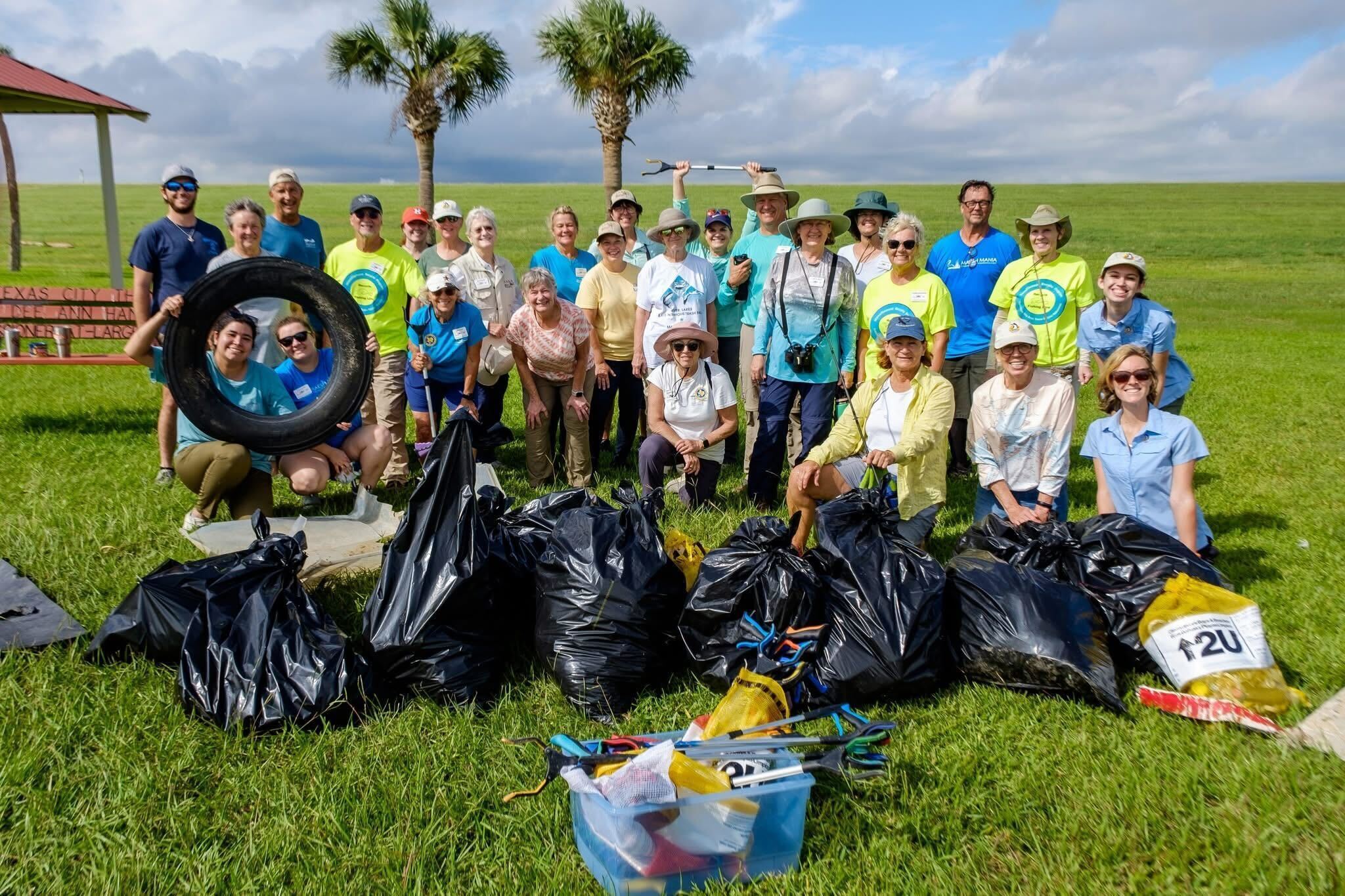
Texas Gulf Clean Up | Photo by Trash Free Gulf
By Claudia Perez Rivas | Kingsville Independent News
Following Earth Day last week, a statewide cleanup effort is continuing to invite Texans, including those in Kingsville, to take part in protecting the waterways that ultimately connect to the Gulf.
Trash Free Gulf, a campaign presented by The Gulf Trust in partnership with H-E-B’s Our Texas, Our Future initiative, has returned for its second year with more than 60 cleanup projects planned across the state through the spring.
In Kingsville, a local cleanup organized by Keep Kingsville Beautiful is scheduled for May 2, offering residents a chance to participate in an effort that organizers say begins far inland, but does not end there.
A statewide issue with local impact
The campaign focuses on reducing litter in streams, rivers, lakes, bays, and coastal waters, with a goal of preventing 45,000 pounds of trash from reaching the Gulf over a 60-day period.
While the coastline may feel distant, organizers say communities like Kingsville play a direct role.
Jay Kleberg, executive director of The Gulf Trust, said in an interview with Kingsville Independent News, “Research shows that roughly 80% of plastics in aquatic environments originate from land-based sources carried by wind and water. We’re asking Texans to reduce their use of single-use plastics and to pick up trash before it makes its way into our creeks, bays, and ocean.”
That connection is rooted in Texas’ extensive network of waterways.
Chrissy Kleberg, a filmmaker and conservation storyteller, said, “Texas is a coastal state, not just a state with a coast, and our primary connection to the Gulf is our vast network of waterways.”
What the data shows
Last year, more than 2,000 volunteers removed over 30,000 pounds of trash statewide. According to organizers, the data revealed a consistent pattern, plastic dominates.
“With more than 45 cleanup locations across the state, one takeaway is that plastic makes up more than 75% of the litter collected. Plastic in the form of bottles, caps, styrofoam cups, and food bags never disappears from the environment; they just break down into smaller and smaller pieces. Those tiny pieces of plastic can absorb harmful chemicals from the environment and be consumed by wildlife and even humans,” Kleberg said.
This year, cleanup sites will again collect data on the type and volume of litter, which will be shared with Keep Texas Beautiful to support research and long-term strategies aimed at reducing litter at its source.
“One of the campaign’s goals is for communities across the state to better understand the litter problem and to take personal responsibility to reduce their use of single-use plastics and ask community leaders about ways to reduce debris that ends up in our waterways and flows down to the coast,” Kleberg said.
Why Texas stands out
Organizers say Texas faces unique challenges when it comes to marine debris.
“The Gulf, due to ocean currents and being largely encircled by land, has some of the highest concentrations of plastics and other trash in the world. Every one of Texas’ rivers also flows to the Gulf, meaning that whether you live in Amarillo or Kingsville, your actions impact the coast and marine environment,” Kleberg said.
That interconnectedness is part of what the campaign hopes to emphasize.
“We are all connected by water. Even if you live far from the coast, trash on the ground can make its way into a waterway and to the Gulf. If you consume Texas seafood, you have a connection to the coast. Roughly a quarter of our population resides on the Texas coast, and a quarter of our economy relies on it. Beyond that, our coastal wetlands, bays, and estuaries serve as nurseries for important species of fish, shellfish, and birds,” Chrissy Kleberg said.
From awareness to action
Beyond the data and statewide goals, organizers say local participation is what drives the campaign.
“Local partnerships mean everything to this campaign. We could not do it without their involvement and ability to rally support from community members,” Chrissy Kleberg said.
For those who take part in cleanup events like the one planned in Kingsville, the experience goes beyond collecting trash.
“Residents should expect to find a few new friends who care about their community and to feel good after spending a little time outdoors!” she said.
Organizers also encourage communities to continue these efforts beyond a single event.
“For smaller communities, consider becoming a Keep Texas Beautiful affiliate or joining forces with a local organization or business and organizing your own cleanups throughout the year,” Chrissy Kleberg said.
A shared responsibility
Organizers say the campaign is as much about awareness as it is about measurable impact.
Kleberg, the Gulf Trust’s executive director, said the effort is also about education and long-term change.
“We can do so much more to educate Texans about the impact of their actions downstream. It’s why we partnered with more communities and expanded our goals to recruit more volunteers and collect more trash. It’s a Texas-sized problem that requires Texas pride and initiative to solve,” he said.
“So many of us consider Texas our home. It’s up to us to take care of it,” Kleberg added. Residents interested in participating in cleanup events can find locations and register at trashfreegulf.com.